

Why water quality matters
Water is a critical input to reusable medical device (RMD) reprocessing. It is used for cleaning, rinsing and thermal disinfection, and as feedwater for the generation of steam used in sterilization.
The quality of that water can influence both the reprocessing outcome and the condition of the equipment and RMDs being processed. Dissolved minerals and salts can contribute to scale, staining, deposits or corrosion. Microorganisms and bacterial endotoxins introduce different risks, particularly where water has final contact with an RMD before completion of the reprocessing process.
For this reason, AS/NZS 5369:2023 establishes water quality requirements according to how and where the water is used within the reprocessing process.
Importantly, water that is suitable for drinking is not necessarily suitable for RMD reprocessing.
The question is not simply:
“Is our water compliant?”
It is:
“Is the water of the required quality for this particular process?”
Different processes require different water quality
There is no single water specification that applies to every stage of reprocessing.
AS/NZS 5369:2023 distinguishes between the quality of water required for different applications, including final rinse water and feedwater used for steam generation.
Understanding which specification applies is the first step in meaningful water quality monitoring.
Final rinse water
Final rinse water has particular significance because it is the last water to contact the RMD before completion of the cleaning and disinfection process.
AS/NZS 5369:2023 Table 7.2 establishes chemical and microbiological requirements for final rinse water used in applicable RMD reprocessing processes.
The parameters include:
- pH
- conductivity
- hardness
- chloride
- iron
- phosphate
- silicate
- microbiological quality
- bacterial endotoxins.
These requirements are intended to control the chemical, mineral and microbiological contaminants that could otherwise remain on the RMD following reprocessing.
Final rinse water for thermolabile endoscopes
Thermolabile endoscopes present a different reprocessing challenge.
AS/NZS 5369:2023 Table 7.3 establishes requirements for final rinse water used by washer-disinfectors for thermolabile endoscopes, in conjunction with ISO 15883-4.
In addition to chemical water quality, microbiological controls are particularly important in this application. Requirements include total viable count and controls for specific waterborne microorganisms, together with bacterial endotoxin.
This distinction demonstrates an important principle within AS/NZS 5369:2023: the required water quality needs to be matched to the reprocessing process and its intended application.
Feedwater for steam generation
Water quality is also relevant to steam sterilization.
AS/NZS 5369:2023 Table 7.4 establishes requirements for feedwater to dedicated steam generators used for steam sterilization.
The quality of the feedwater can influence the steam subsequently produced. Dissolved contaminants may contribute to scale, deposits, staining or corrosion within the steam generation and distribution system and can ultimately affect the quality of steam delivered to the sterilization process.
Feedwater should therefore be considered part of the steam sterilization system, not simply as a building or engineering utility.
What do water quality results tell us?
A water analysis report contains a number of parameters, each providing different information about the water and its suitability for reprocessing.
Conductivity
Conductivity provides an indication of the concentration of dissolved ionic substances within the water.
It is a useful indicator of water treatment performance because changes in conductivity may indicate changes in the quantity of dissolved salts passing through a treatment system such as reverse osmosis.
Conductivity is therefore valuable both as an individual compliance parameter and as a parameter that can be trended over time.
Hardness
Water hardness is primarily associated with dissolved calcium and magnesium salts.
Excessive hardness can contribute to scale and mineral deposits on equipment, heating surfaces and RMDs. It can also affect the performance and efficiency of water treatment and cleaning processes.
Chloride
Elevated chloride concentrations can contribute to corrosion of susceptible metallic surfaces, particularly under adverse process conditions.
Control of chloride is therefore relevant both to RMD integrity and to the equipment and infrastructure used to deliver the reprocessing process.
Iron
Iron can contribute to staining, discoloration and deposits.
An unexpected change in iron concentration may also provide useful information when investigating changes or deterioration within a water treatment or distribution system.
Phosphate and silicate
Phosphates and silicates can contribute to deposits or residues on RMD and equipment surfaces.
Controlling these substances helps minimise the potential for residues remaining after the final rinse or accumulating within the reprocessing system.
pH
pH indicates the acidity or alkalinity of the water.
Rather than being considered independently, pH should be interpreted together with the other chemical characteristics of the water and the requirements of the reprocessing process.
Microbiological water quality
Chemical purity is only one aspect of compliant process water.
Microbiological testing provides information about microorganisms present within the water system and is especially important where water has final contact with a processed RMD.
Total viable count
Total viable count, or TVC, measures microorganisms capable of being recovered and grown under the specified test conditions.
An increasing TVC may indicate deterioration in microbiological control and can warrant investigation of the water treatment or distribution system.
For endoscope reprocessing, additional requirements apply to particular waterborne microorganisms because of their relevance to this application.
Bacterial endotoxin
Endotoxin is different from viable microbial contamination.
Endotoxins are components associated with the outer membrane of Gram-negative bacteria. Importantly, the absence or destruction of viable bacteria does not necessarily demonstrate the absence of endotoxin.
This is why microbiological counts and endotoxin results should not be treated as interchangeable measures.
TVC provides information about recoverable viable microorganisms. Endotoxin testing provides information about bacterial endotoxin remaining in the water.
Both provide different evidence about water quality.
Water treatment does not finish at the RO plant
Reverse osmosis is commonly used to generate high-quality process water, but achieving the required quality at the RO plant is only one part of the system.
Once treated, water may travel through:
- storage vessels
- pumps
- recirculation loops
- distribution pipework
- valves and fittings
- filters
- flexible connections
- reprocessing equipment
before reaching the point where it contacts the RMD.
Water quality can change along this pathway.
Stagnation, inadequate circulation, temperature, microbial biofilm, deterioration of system components, maintenance activities and contamination within the distribution system can all influence the water finally delivered to the process.
As a result: A compliant result at the RO plant does not automatically demonstrate compliant water at the point of use.
Assessment of water quality needs to consider where the water actually enters or contacts the reprocessing process.
The importance of representative sampling
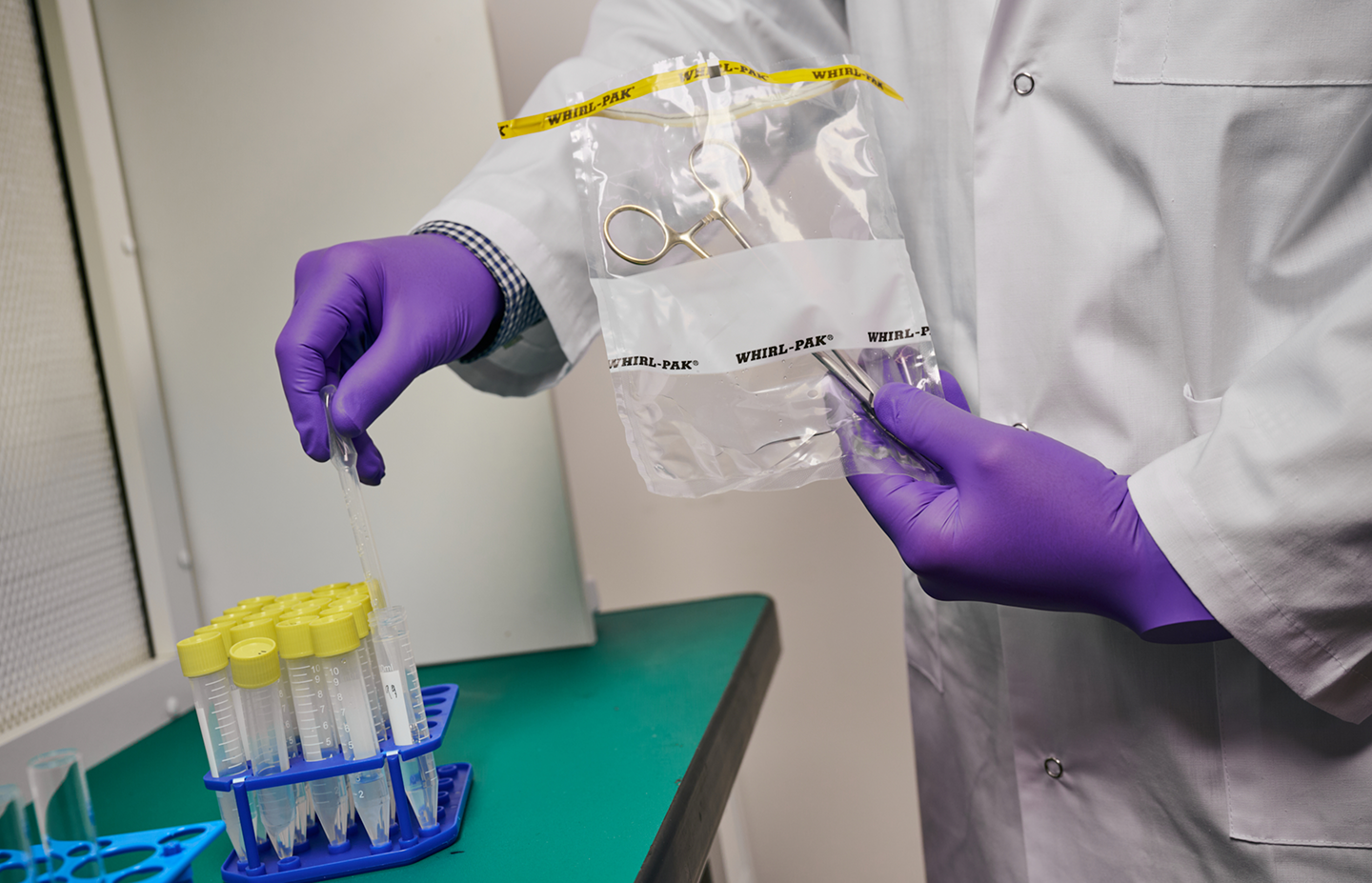
A laboratory can only analyse the sample it receives.
For this reason, the integrity of water quality testing begins before the sample reaches the laboratory.
The selected sampling location needs to represent the water being assessed. Sampling methods should minimise the possibility of introducing external contamination, particularly where microbiological testing is being undertaken.
Consideration also needs to be given to:
- the sampling point
- the condition of the outlet
- any flushing required before sampling
- appropriate sample containers
- collection technique
- transport conditions
- sample temperature where applicable
- time between collection and analysis.
Poor sampling technique can influence the result and make it difficult to distinguish between contamination introduced during sampling and a genuine problem within the water system.
A robust water quality program therefore considers sampling, testing and interpretation as one connected process.
Interpreting a non-compliant result
A result outside the applicable water quality specification requires investigation.
The laboratory result tells us what was detected in the sample and at the sampling point. It does not necessarily tell us why it occurred.
For example, a microbiological non-conformance identified at a washer-disinfector does not automatically establish that the RO plant has failed.
Investigation may need to consider:
- incoming water quality
- pre-treatment systems
- RO membrane performance
- storage conditions
- distribution and recirculation
- dead legs or areas of stagnation
- microbial biofilm
- filtration
- pipework and components
- equipment connections
- maintenance activities
- sampling location and technique.
Similarly, an unexpected chemical result may require investigation of both the treatment system and the materials or components the water encounters between production and use.
Identifying where the water first moves outside specification can be particularly valuable in isolating the source of a problem.
Trending provides more information than a single result
A single compliant laboratory report provides evidence about the sample collected at that point in time.
Trending can identify gradual changes in conductivity, chemical composition or microbiological quality that may indicate deterioration in system performance before a significant non-conformance occurs.
For example, a result may remain within the applicable acceptance limit while showing a consistent movement away from the water system’s established baseline.
The value lies not simply in asking:
“Did the water sample that was analysed pass?”
but also:
“Has anything changed?”
Water quality monitoring is therefore most effective when results are retained, reviewed and compared over time rather than treated as isolated compliance certificates.
Establishing a consistent history of acceptable water quality results can also have a practical benefit. AS/NZS 5369:2023 allows testing frequency to be reviewed and, where appropriate, reduced where consistent results have been demonstrated over time. Effective trending can therefore support both ongoing process assurance and a more proportionate, cost-effective approach to water quality monitoring.
Water quality is part of process control
Water should not be treated as something separate from RMD reprocessing simply because it is supplied by an engineering system.
It is a process input.
The quality of the water reaching the RMD can influence cleaning, rinsing, disinfection and sterilization processes, and the applicable quality requirements vary according to its intended use.
Effective water quality management therefore requires an understanding of the complete pathway:
Water source → treatment → storage and distribution → point of use → representative sampling → laboratory analysis → interpretation and trending
AS/NZS 5369:2023 provides the specifications against which water quality can be assessed. Maintaining control requires the organisation to understand how that water is produced, distributed and used within its own reprocessing processes.
Ultimately, a compliant laboratory result is important, but the greater objective is ongoing confidence that the required water quality is being delivered where it is needed, for the process in which it is being used.
How SVA can help
SVA combines specialist reprocessing knowledge, multidisciplinary experience and independent testing to help healthcare facilities understand and manage water quality across the reprocessing pathway. By considering water quality in the context of its intended use, equipment requirements, process performance and results over time, SVA can help clients interpret findings, identify emerging trends and establish an appropriate monitoring approach.
This broader perspective supports informed decisions about investigation, corrective action and testing frequency, helping facilities maintain effective water quality management without unnecessary testing or cost.
This publication contains original content developed by Sterilizer Validation Australia and may reference third-party standards, guidelines and other published works. Copyright in those referenced works remains with the respective copyright owners.
SVA content may be shared in its original, unmodified form with appropriate acknowledgement. Reproduction, modification, adaptation or commercial use of SVA content requires prior written permission from Sterilizer Validation Australia Pty Ltd.
Copyright © 2026 Process Validation & Design Pty Ltd T/As Sterilizer Validation Australia [SVA]. All rights reserved.
 Article
Selecting Data Loggers for Validation Applications
Data loggers provide independent evidence of process conditions during Performance Qualification. However, a logger is not suitable simply because it is calibrated and capable of operating within the required temperature range.
Read article
 Article
A Guide to Performance Qualification under AS/NZS 5369:2023
Performance Qualification (PQ) forms part of the validation of reusable medical device reprocessing processes.
Read article Article
When Device Protection Creates a Cleaning Challenge
During Performance Qualification of an automated cleaning process for flexible endoscopes, SVA identified cleaning efficacy failures associated with the way the devices were being presented within the washer-disinfector.
Read article