

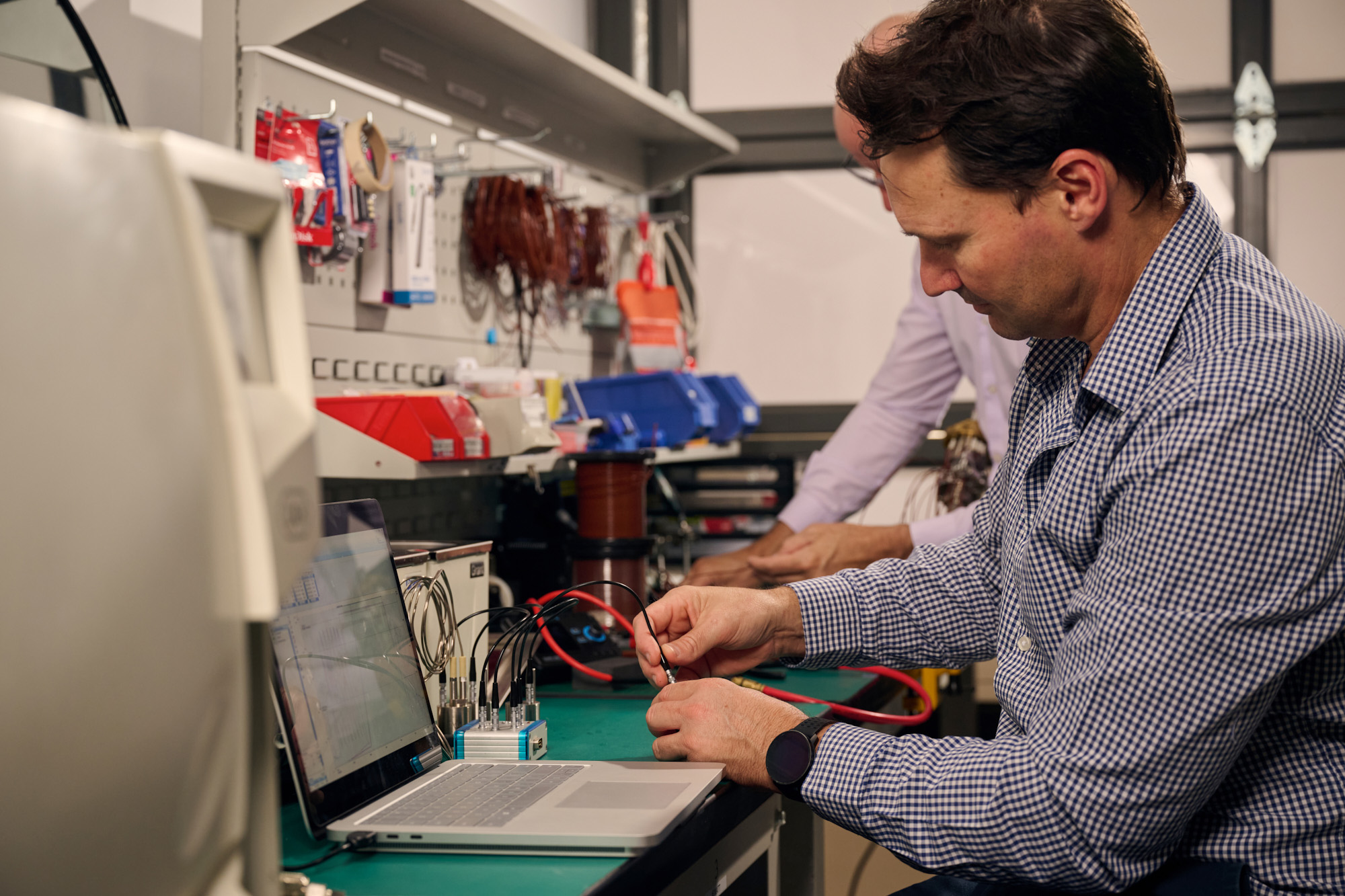
Manual cleaning remains an important part of reusable medical device reprocessing.
For some devices, manual cleaning is performed before automated cleaning. For others, the manufacturer’s Instructions for Use may require manual cleaning as the cleaning process itself.
Because manual cleaning relies heavily on operator technique, it can sometimes be viewed as too variable to validate in the same way as an automated process.
But variability does not mean a process cannot be validated.
The real question is whether the variables that influence the cleaning outcome can be defined, controlled and tested sufficiently to demonstrate that the process consistently achieves the required result.
Why manual cleaning matters
Cleaning is fundamental to successful reprocessing.
Before a reusable medical device can be effectively disinfected or sterilized, contamination and residual soil need to be adequately removed from the surfaces that require treatment.
Automated cleaning is generally preferred where an appropriate process is available because equipment can provide greater control and repeatability of variables such as temperature, time, water delivery and chemical dosing.
However, automated cleaning does not eliminate the need for manual processes.
Manual cleaning may be required because of the design of a reusable medical device, its manufacturer’s Instructions for Use, or because particular cleaning steps must be completed before the device enters an automated washer-disinfector.
The challenge is therefore not to eliminate manual cleaning simply because it contains human variables. It is to establish enough control over those variables to create a reliable and reproducible process.
What does validation mean for a manual process?
AS/NZS 5369:2023 establishes validation as an important component of reprocessing process control.
For manual cleaning, validation is not about attempting to remove every element of human involvement.
Instead, it involves establishing a defined cleaning method and demonstrating that, when that method is followed under the established conditions, the required cleaning outcome can be achieved.
This means moving away from instructions such as:
“Clean thoroughly.”
A validated process needs considerably more definition.
Depending on the device and cleaning process, the work instruction may need to establish:
- how the device is prepared for cleaning
- equipment and accessories required
- cleaning chemistry and concentration
- water temperature
- water volume or depth
- detergent contact time
- brushing, flushing or irrigation requirements
- treatment of lumens, joints, hinges and other difficult-to-access areas
- rinsing requirements
- the sequence in which activities are performed
- inspection requirements
- drying requirements where applicable.
The objective is to turn a variable human activity into a defined and repeatable process that can be assessed objectively.
Start with the device and its Instructions for Use
A manual cleaning procedure should not be developed independently of the reusable medical device being processed.
Manufacturer Instructions for Use are an essential starting point because different devices can present very different cleaning challenges.
A straightforward instrument with easily accessible surfaces is fundamentally different from a complex device containing narrow lumens, channels, joints or other difficult-to-clean features.
The cleaning method needs to address the characteristics of the device and ensure that cleaning action reaches all surfaces that require treatment. This includes internal surfaces and difficult to reach areas.
This is particularly important when selecting devices for Performance Qualification. The process should be challenged using devices that appropriately represent the cleaning challenge presented by the reusable medical devices processed by the facility.
Define and control the variables
One of the biggest challenges in manual cleaning is controlling the variables that can change between operators or between one cleaning activity and the next.
Consider something as apparently simple as preparing a detergent bath.
If one operator fills a sink to 20 litres and another fills it to 30 litres, and both add the same amount of detergent, the two operators are not using the same chemical concentration.
Similarly, if one operator cleans at the recommended temperature while another uses substantially hotter water, the cleaning process may behave differently.
Useful controls can therefore be very practical.
Chemical concentration
Cleaning chemistry should be prepared at the required concentration. Where chemical dosing is manual, the method used to measure both water and chemical quantity needs to be reliable and repeatable.
Water volume
If chemical concentration depends on the volume of water within a sink or cleaning vessel, that volume needs to be reproducible.
A clearly established fill level is considerably more controlled than relying on an operator to estimate the appropriate amount of water.
Water temperature
Temperature can influence both the behaviour of contamination and the performance of cleaning chemistry.
Where the cleaning process specifies a temperature range, that range needs to be measurable and consistently maintained.
Contact time
If a cleaning agent requires a defined exposure or contact time, operators need a reliable method of achieving and monitoring that time.
Brushing, flushing and irrigation
For devices incorporating channels, lumens or other difficult-to-access areas, the procedure may need to define the equipment and technique used to deliver cleaning action internally.
Simply immersing a complex device in cleaning solution does not demonstrate that the internal surfaces have been effectively cleaned.
These controls may appear simple, but together they convert the cleaning method into a process that can be described, repeated and tested.
Then test whether the process actually works
Documenting a detailed work instruction does not, by itself, validate the cleaning process.
The process needs to be challenged, and the resulting cleaning outcome assessed against predetermined acceptance criteria.
Performance Qualification provides an opportunity to do this using representative reusable medical devices and the actual cleaning process used by the healthcare organisation.
Following cleaning, efficacy can be assessed using appropriate methods such as visual inspection and quantitative assessment of residual contamination.
If the required result is not achieved, the response should not simply be to repeat the test until a passing result occurs.
The finding should prompt investigation.
Was the chemistry prepared correctly?
Was the required temperature maintained?
Was sufficient cleaning action applied?
Were internal channels appropriately brushed, flushed or irrigated?
Was the device particularly challenging to clean?
Was the work instruction sufficiently detailed?
Did different operators interpret the procedure differently?
These questions help identify where additional process control may be required.
The human element is part of the process
Manual cleaning inevitably involves operator technique.
That is not something validation can simply remove.
Instead, competency, training and adherence to the validated work instruction become important elements in maintaining the process.
A manual cleaning process that performs effectively when undertaken by one experienced operator but cannot be reproduced by other appropriately trained personnel is unlikely to provide sufficient confidence in routine use.
Good validation should therefore help identify where a process is overly dependent on individual technique.
Sometimes the solution is greater procedural detail. In other situations, improved tools, irrigation equipment, dosing systems or other engineering controls may reduce unnecessary variability.
The aim is not to eliminate people from manual cleaning. It is to make the process less dependent on individual interpretation.
Validation is not a one-time exercise
Demonstrating that a manual cleaning process works does not mean it will continue to perform indefinitely without oversight.
Changes can affect the validated process. For example:
- the cleaning chemistry may change
- chemical concentration or dosing arrangements may change
- new reusable medical devices may be introduced
- manufacturer Instructions for Use may be revised
- brushes or irrigation equipment may change
- work instructions may be altered
- water conditions may change
- routine monitoring or inspection may indicate an unexpected result.
Where a change has the potential to affect the validated cleaning process, its significance should be assessed and appropriate requalification considered.
Routine monitoring, auditing and staff competency also help demonstrate that the established process continues to be followed between Performance Qualification activities.
Manual does not mean uncontrolled
The important distinction is not whether a cleaning process is manual or automated.
It is whether the process is sufficiently defined, controlled, reproducible and measurable to demonstrate that it achieves its intended outcome.
Manual processes naturally present greater opportunities for variation, which makes clear work instructions, control of process variables and operator competency particularly important.
But that variability is also precisely why manual cleaning should not sit outside the validation framework.
Where manual cleaning is relied upon as part of reusable medical device reprocessing, the healthcare organisation should understand the process, identify the variables that influence its performance, establish appropriate controls and gather objective evidence that the required cleaning outcome can be achieved.
Manual cleaning can be validated. The challenge is making a human-dependent process sufficiently controlled that its effectiveness can be demonstrated, reproduced and maintained.
How SVA can help
SVA combines multidisciplinary expertise, practical reprocessing experience and independent testing to help healthcare facilities evaluate and validate manual cleaning processes. By considering the devices being processed, cleaning method, chemistry, water quality, equipment, environment and operator practices, SVA can help identify process variability and provide objective evidence that manual cleaning processes are effective, repeatable and appropriately controlled.
This publication contains original content developed by Sterilizer Validation Australia and may reference third-party standards, guidelines and other published works. Copyright in those referenced works remains with the respective copyright owners.
SVA content may be shared in its original, unmodified form with appropriate acknowledgement. Reproduction, modification, adaptation or commercial use of SVA content requires prior written permission from Sterilizer Validation Australia Pty Ltd.
Copyright © 2026 Process Validation & Design Pty Ltd T/As Sterilizer Validation Australia [SVA]. All rights reserved.
 Article
Selecting Data Loggers for Validation Applications
Data loggers provide independent evidence of process conditions during Performance Qualification. However, a logger is not suitable simply because it is calibrated and capable of operating within the required temperature range.
Read article
 Article
Understanding Water Quality in Reusable Medical Device Reprocessing
Water is a critical input to reusable medical device (RMD) reprocessing. It is used for cleaning, rinsing and thermal disinfection, and as feedwater for the generation of steam used in sterilization.
Read article Article
A Guide to Performance Qualification under AS/NZS 5369:2023
Performance Qualification (PQ) forms part of the validation of reusable medical device reprocessing processes.
Read article