


The Challenge
During Performance Qualification of an automated cleaning process for flexible endoscopes, SVA identified cleaning efficacy failures associated with the way the devices were being presented within the washer-disinfector.
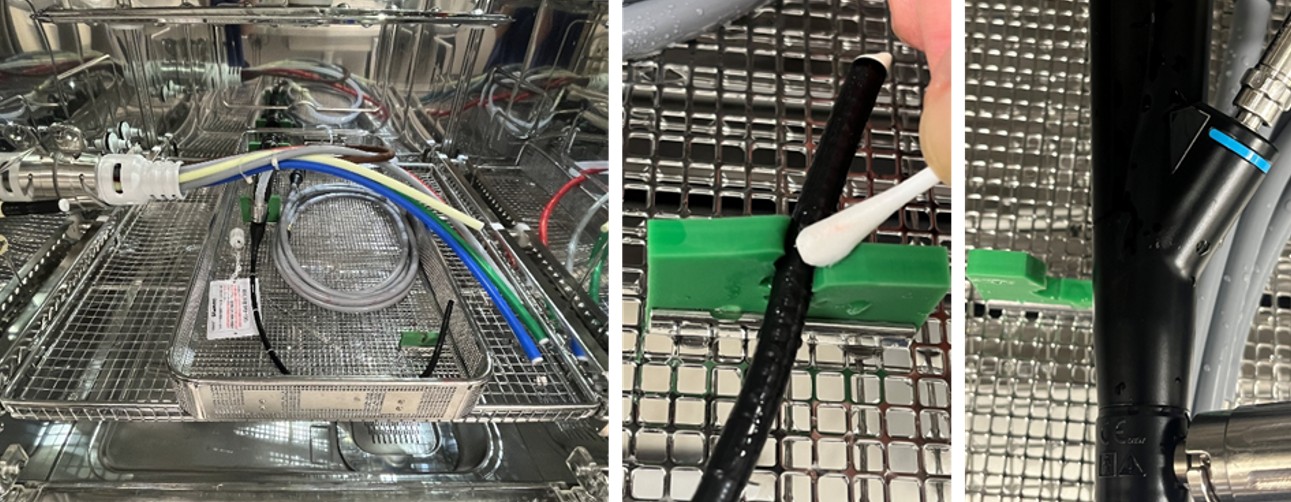
The flexible endoscopes were being processed within sterilization trays, with green silicone restraints used to help prevent excessive movement and protect the distal tips of endoscopes from damage during the wash process.
While the restraints provided physical protection, cleaning efficacy testing identified an unintended consequence: residual test soil was not being effectively removed where the silicone restraints remained in contact with the devices, particularly around the distal tips.
Looking Beyond the Washer Cycle
The finding demonstrated that effective automated cleaning depends on more than the washer-disinfector completing its programmed cycle.
How a reusable medical device is positioned and restrained can influence whether water and cleaning chemistry can adequately reach the surfaces requiring treatment. In this instance, the contact points created by the silicone restraints were interfering with cleaning efficacy.
The challenge was therefore to protect the vulnerable distal tips during automated washing without creating contact points that impeded the cleaning process.
Trialling a Different Approach
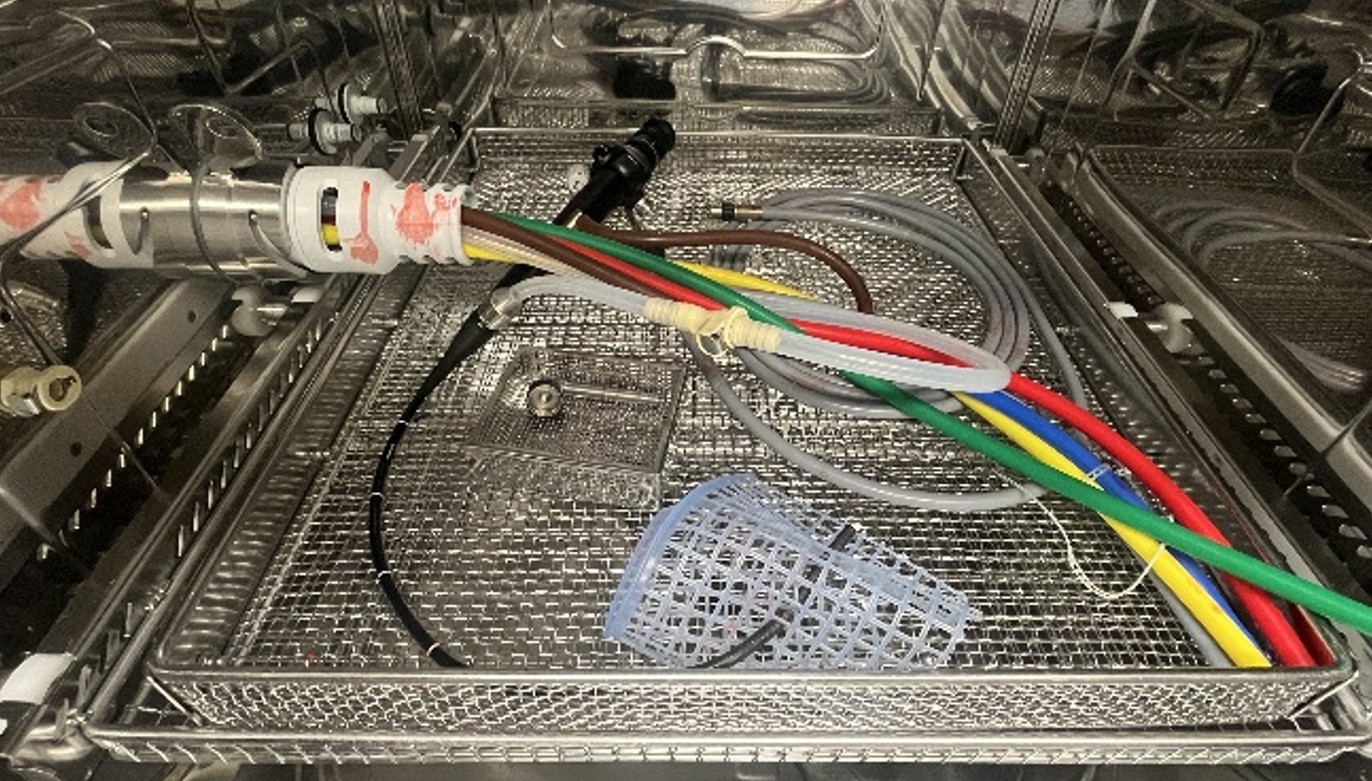
Further testing was undertaken using silicone matting as an alternative means of protecting the ureteroscope distal tips.
The matting provided protection against excessive movement during the wash process while reducing the restrictive contact points associated with the original restraints.
Following the change, subsequent cleaning efficacy testing was negative for both visual soil and protein residue, with the tests achieving a Pass result.
The Outcome
Based on the successful testing, SVA recommended consideration of replacing the existing metal tray and silicone restraint arrangement with silicone matting to help protect the ureteroscope distal tips while minimising contact points capable of interfering with cleaning.
The case demonstrates an important principle of Performance Qualification: how a reusable medical device is presented to the process can be just as important as the process parameters themselves.
A solution introduced for a legitimate reason, in this case protecting a delicate device from damage, can unintentionally affect another part of the reprocessing process.
Performance Qualification provided the opportunity to identify that interaction, trial an alternative arrangement and demonstrate through cleaning efficacy testing that the revised approach achieved the required cleaning outcome.
 Article
Selecting Data Loggers for Validation Applications
Data loggers provide independent evidence of process conditions during Performance Qualification. However, a logger is not suitable simply because it is calibrated and capable of operating within the required temperature range.
Read article
 Article
Understanding Water Quality in Reusable Medical Device Reprocessing
Water is a critical input to reusable medical device (RMD) reprocessing. It is used for cleaning, rinsing and thermal disinfection, and as feedwater for the generation of steam used in sterilization.
Read article Article
A Guide to Performance Qualification under AS/NZS 5369:2023
Performance Qualification (PQ) forms part of the validation of reusable medical device reprocessing processes.
Read article