

The Challenge
During Performance Qualification of Endoscope Storage Cabinets located in a Metropolitan hospital, SVA identified significant bacterial and fungal growth, despite the cabinets being compliant with ISO 16442 requirements.
Repeat testing produced similar results, indicating that the unexpected findings could not simply be attributed to an isolated test result.
With the cabinets designed to provide controlled storage conditions for reprocessed endoscopes, SVA began investigating what was influencing their performance in the installed environment.
Looking Beyond the Cabinets
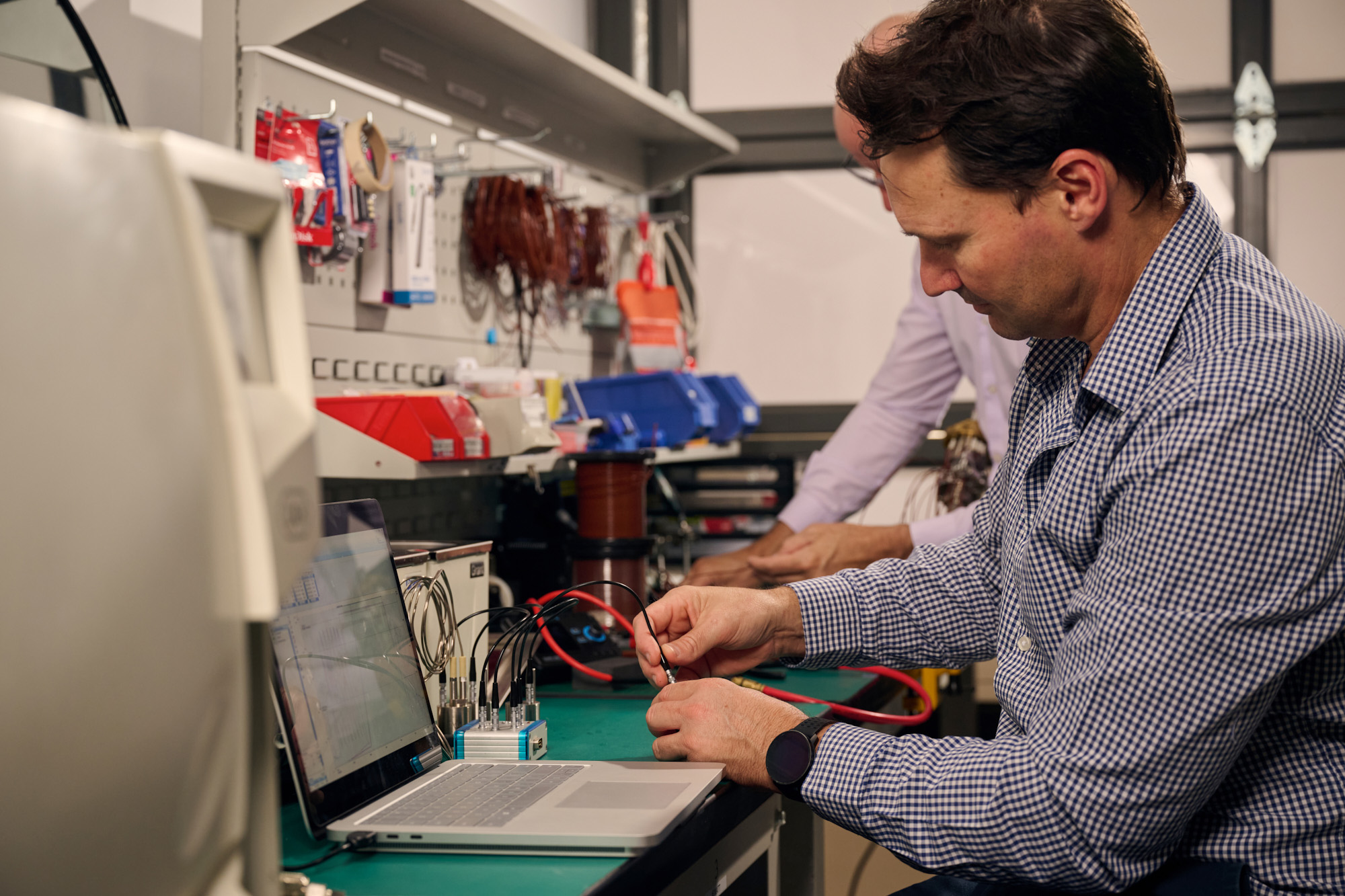
An SVA technician investigated the cabinets and the surrounding environment to better understand how air was moving around and through the equipment.
The investigation identified that air pressure in the surrounding environment was overcoming the internal pressure maintained by the cabinets. This allowed environmental air to enter the cabinets, affecting the controlled conditions they were intended to maintain.
Importantly, the issue was not simply a failure of the cabinets themselves. Their performance was being influenced by conditions within the room in which they had been installed.
Finding the Underlying Cause
Further investigation identified a problem with the room ventilation: an external ceiling vent had not been installed.
Without the intended ventilation arrangement, pressure within the surrounding environment was higher than anticipated. This pressure imbalance was sufficient to interfere with the cabinets’ internal airflow and allow ingress of environmental air.
The finding provided an explanation for the microbiological results observed during PQ testing and identified an issue outside the cabinets that required attention.
The Outcome
SVA advised the health service organisation of the findings, enabling appropriate mitigation to be planned.
SVA’s investigation also provided objective evidence of a broader infrastructure issue affecting the reprocessing environment. The findings helped the facility build an evidence-based case for improvement and contributed to securing funding for an upgrade to the HVAC system.
The investigation demonstrated why an unexpected PQ result should not simply lead to repeated testing in the hope of achieving a different result. When repeat testing confirms a problem, understanding why the process is not achieving the expected outcome becomes critical.
It also highlights an important principle of Performance Qualification: equipment does not operate in isolation. Even where equipment itself meets applicable requirements, the environment, utilities and infrastructure supporting it can influence its performance in everyday use.
How SVA helped
Rather than simply repeating testing following an unexpected PQ result, SVA investigated how the storage cabinets were interacting with the surrounding environment. This whole-of-system approach identified an underlying ventilation and pressure issue that would not have been apparent from equipment compliance alone, giving the facility a clear basis for corrective action.
This case study illustrates circumstances encountered during a specific project. Findings and outcomes are specific to the circumstances described and may not be applicable to other equipment, processes or facilities.
SVA resources may be shared in their original, unmodified form with appropriate attribution. Reproduction, adaptation or use for commercial purposes requires prior written permission from SVA.
Copyright © 2026 Process Validation & Design Pty Ltd T/As Sterilizer Validation Australia [SVA]. All rights reserved.
 Article
Selecting Data Loggers for Validation Applications
Data loggers provide independent evidence of process conditions during Performance Qualification. However, a logger is not suitable simply because it is calibrated and capable of operating within the required temperature range.
Read article
 Article
Understanding Water Quality in Reusable Medical Device Reprocessing
Water is a critical input to reusable medical device (RMD) reprocessing. It is used for cleaning, rinsing and thermal disinfection, and as feedwater for the generation of steam used in sterilization.
Read article Article
A Guide to Performance Qualification under AS/NZS 5369:2023
Performance Qualification (PQ) forms part of the validation of reusable medical device reprocessing processes.
Read article